Saxony
DuckRare breed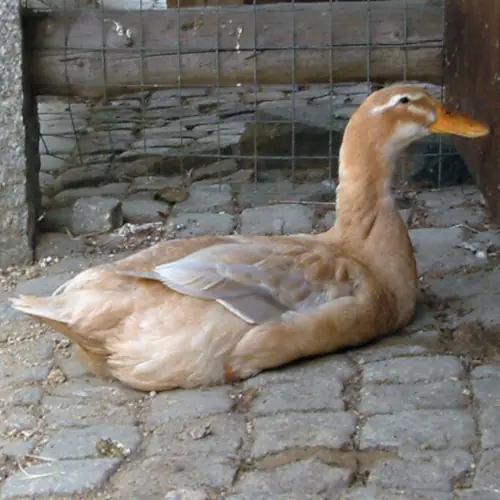
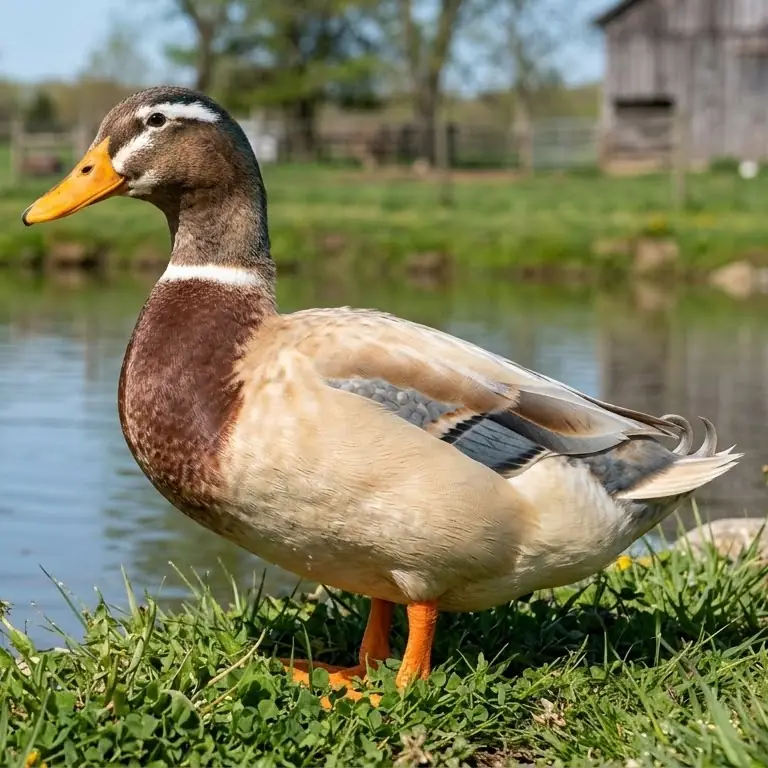
The Saxony was Albert Franz's project in 1930s Chemnitz — a big dual-purpose duck crossed up from Rouen, German Pekin and Blue Pomeranian stock — and it very nearly died with the war, which destroyed almost all the original flock. Franz rebuilt it from the survivors and had it recognised in East Germany in 1957; the first birds did not reach the United States until 1984. The result is one of the handsomest ducks kept: drakes carry a soft oatmeal-and-rust colouring found in no other breed, the product of a diluted mallard pattern. It is a genuine dual-purpose bird — a good layer that still dresses out heavy — with an unusually calm temperament and enough foraging drive to earn most of its own feed.
Weight
How to spot it
- Bill
- Yellow to orange in the duck; pale yellow-green in the drake
- Carriage
- About 20° above horizontal on a long, broad, heavy frame
- Plumage
- Drake has a blue-grey head, white neck ring, rust-red breast and oatmeal body; the duck is buff-oatmeal with white eye stripes
- Legs & feet
- Orange
- Look for
- A large duck in washed-out pastel mallard colours — like a Rouen seen through fog
Ancestry
How this breed was developed. Historical records, not crosses to make today.


Rouen, German Pekin and Blue Pomeranian stock, in 1930s Chemnitz.
Varieties
Find Saxony breeders near you
5 providers currently list Saxony.
Browse Saxony breeders