Rouen
Duck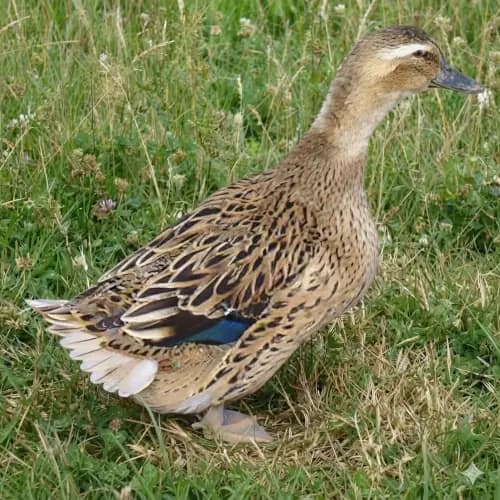
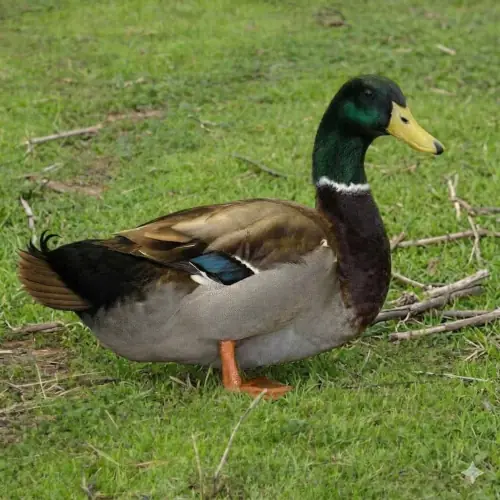
A Rouen looks like a mallard that has been left in the oven too long: identical plumage pattern, roughly twice the mass. French farmers selected it around the town of Rouen for the table, and English breeders in the 1800s pushed it into the deep, boat-shaped show bird recognised today. There are effectively two Rouens in circulation — the massive APA exhibition type, which is a slow-growing, poor-laying show bird, and the lighter production 'Rouen Clair' sold by hatcheries, which lays respectably and moves like a normal duck. Its size makes it flightless and calm, but also clumsy on ice and prone to keel and leg trouble if it is kept fat on a hard surface.
Weight
How to spot it
- Bill
- Drake's is yellow to olive-green with a black bean; the duck's is orange overlaid with brown
- Carriage
- Nearly horizontal and low-slung, with a keel that can touch the ground in show-type birds
- Plumage
- Mallard pattern — drake with bottle-green head, white neck ring and claret breast; duck warm brown with fine dark penciling and a blue speculum
- Legs & feet
- Orange, short, set far back under a heavy body
- Look for
- Mallard markings on a bird far too big to fly; the duck's penciling is much crisper than a wild mallard's
Ancestry
How this breed was developed. Historical records, not crosses to make today.


Find Rouen breeders near you
21 providers currently list Rouen.
Browse Rouen breeders