Indian Runner
DuckAlso called Runner
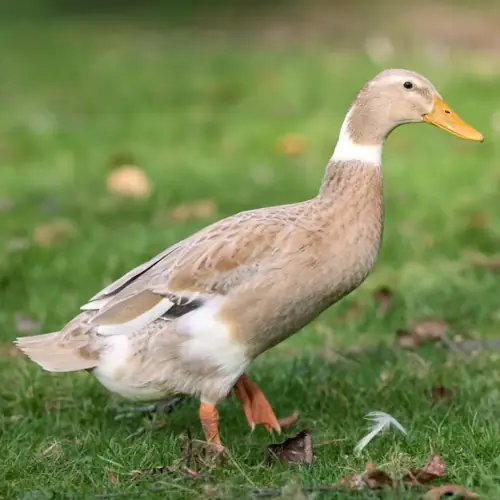
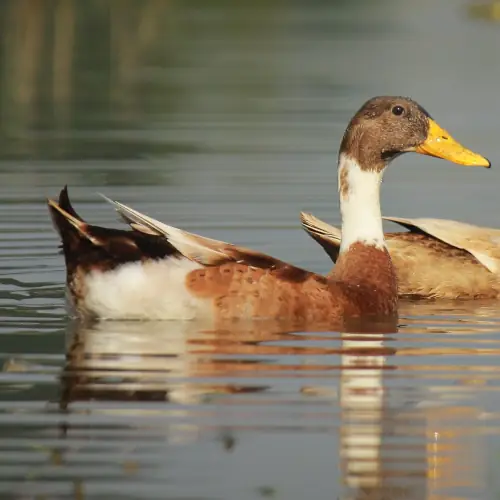
The Runner stands nearly vertical and moves at a trot instead of a waddle — the 'penguin duck' of Victorian menageries, and the shape from which the Campbell and most other laying breeds were built. It has nothing to do with India: the birds arrived in Europe from the East Indies, chiefly Java and Bali, where they had been herded through wet rice paddies for centuries by farmers who wanted a duck that could walk miles a day and eat pests without trampling the crop. That heritage makes them the best foragers on this list and the most eager walkers, but also the least interested in sitting on their own eggs. They come in more standardised colours than any other duck breed and are unmistakable in a lineup from fifty yards.
Weight
How to spot it
- Bill
- Long and wedge-shaped, running in a straight line with the top of the skull
- Carriage
- Near-vertical — 45–75° above horizontal, giving a bowling-pin silhouette
- Plumage
- Many recognised colours; the classic is fawn-and-white with a solid coloured back
- Legs & feet
- Orange, set very far back, which is what forces the upright posture
- Look for
- A duck that stands like a wine bottle and runs rather than waddles
Ancestry
How this breed was developed. Historical records, not crosses to make today.
- Contributed to
 Campbell
Varieties

Fawn And White
Find Indian Runner breeders near you
19 providers currently list Indian Runner.
Browse Indian Runner breeders