Dutch Hookbill
DuckRare breedAlso called Dutch Hookbilled
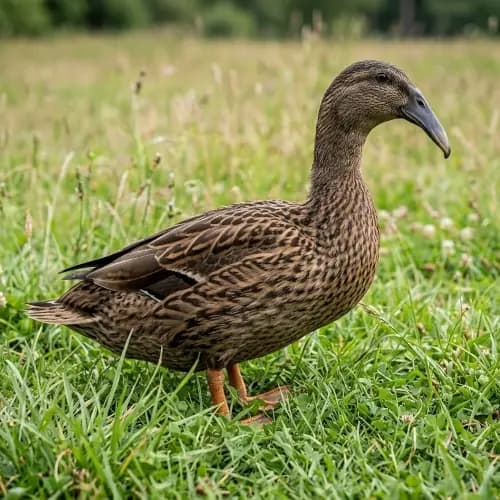
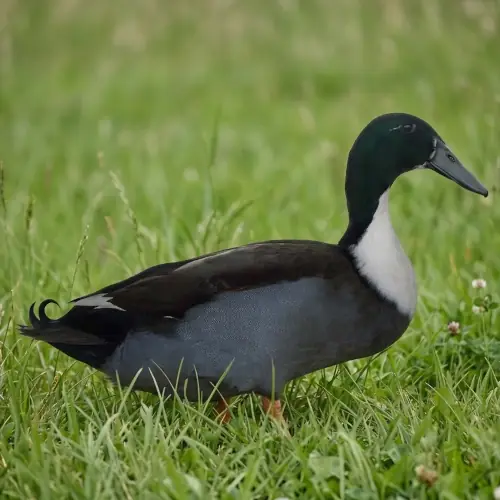
The Dutch Hookbill's bill curves downward in a smooth arc, a trait recorded in the Netherlands as early as the seventeenth century and found in no other duck. The usual explanation is practical: Dutch farmers let flocks feed freely on canals and waterways, and the distinctive profile let a passing hunter tell a farmed bird from a wild mallard at a distance. It nearly disappeared entirely — by the 1980s only a handful of birds remained in the Netherlands, and it is still one of the rarest ducks in the world, listed Critical. Those that survive are outstanding: hardy, superb foragers that can largely feed themselves near water, strong layers of blue-green eggs, and lively enough to fly short distances.
Weight
How to spot it
- Bill
- Distinctly curved downward along its whole length — unique among ducks and unmistakable in profile
- Carriage
- Around 20–35° above horizontal, light and streamlined
- Plumage
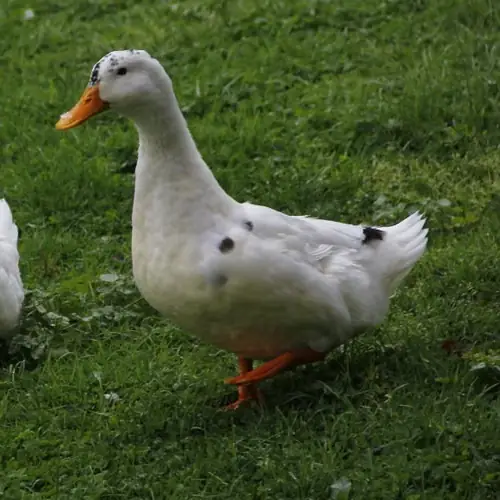
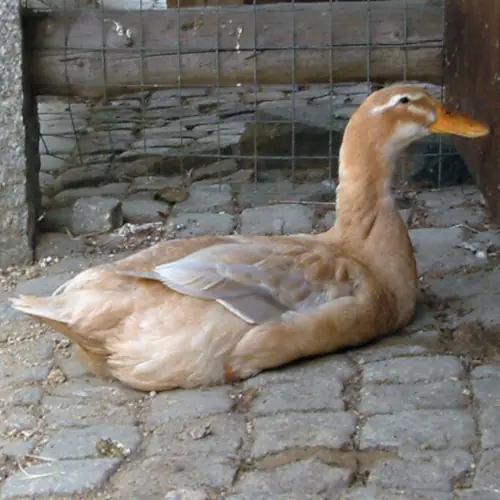
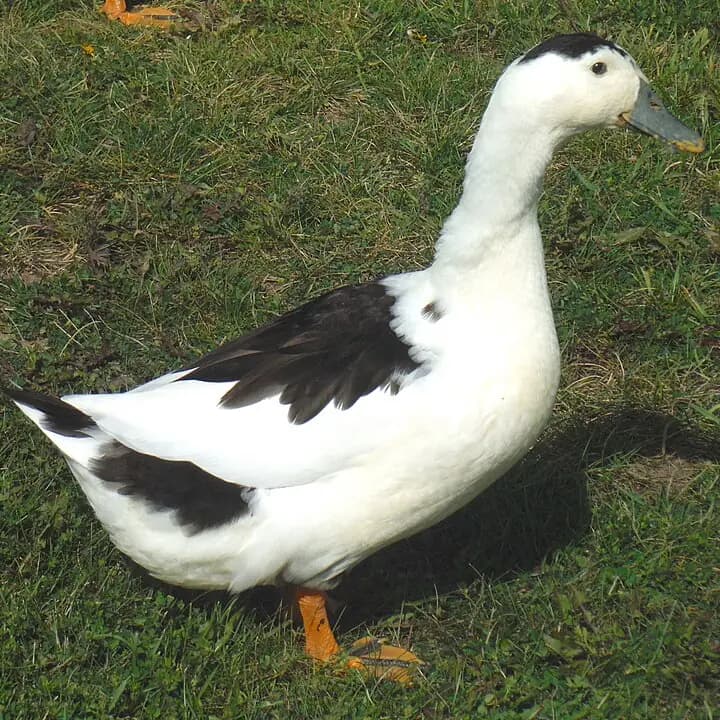
- Usually dusky, white-bibbed or white; the bill, not the colour, identifies the breed
- Legs & feet
- Orange
- Look for
- The banana-shaped bill in silhouette; a straight-billed bird is not a Hookbill
Find Dutch Hookbill breeders near you
3 providers currently list Dutch Hookbill.
Browse Dutch Hookbill breeders