Welsh Harlequin
DuckRare breedAlso called Harlequin
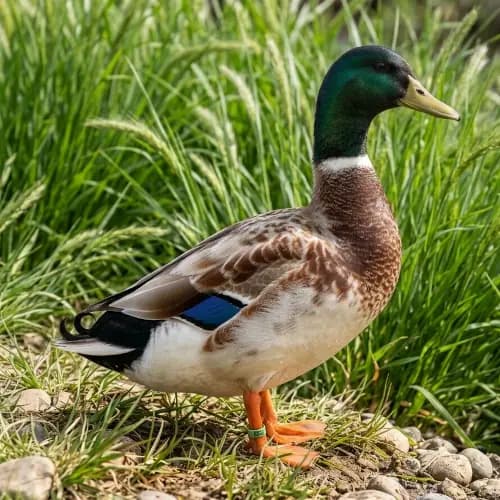
The Welsh Harlequin began as an accident: in 1949 Group Captain Leslie Bonnet found two off-colour ducklings in a Khaki Campbell flock in Wales and bred on from the mutation. It kept the Campbell's laying ability while trading the nervous streak for a genuinely placid disposition, which makes it one of the few high-output layers that is also pleasant to handle. It also carries a rare practical advantage — day-old ducklings can be sexed by bill colour with better than 90 percent accuracy, so a keeper can cull or keep drakes at hatch instead of waiting weeks. Bonnet's original flock was nearly wiped out when a fox got in, and the breed is still listed at risk despite its usefulness.
Weight
How to spot it
- Bill
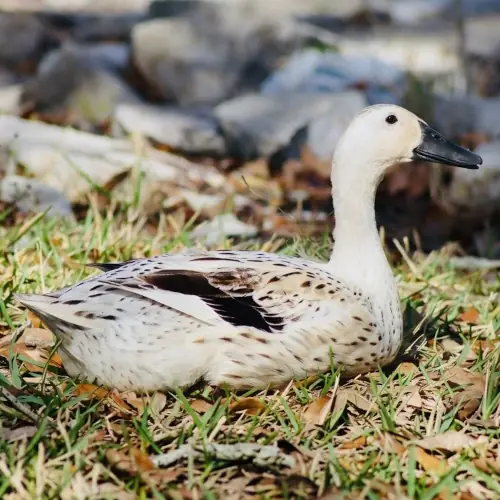
- Green-black in the drake; dark slate in the duck. Ducklings: darker bill means female, lighter means male
- Carriage
- About 20–30° above horizontal, slim and Campbell-like in build
- Plumage
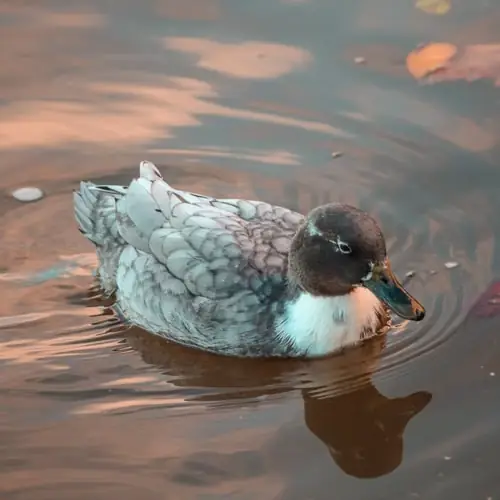
- Frosted, lace-like fawn and white; the drake adds a bronze-green head and a claret breast
- Legs & feet
- Orange-brown
- Look for
- Campbell shape in pale, intricately frosted colouring instead of plain khaki
Varieties
Find Welsh Harlequin breeders near you
14 providers currently list Welsh Harlequin.
Browse Welsh Harlequin breeders