How to Check Whether You Can Legally Keep Chickens
By Shirley W. · September 6, 2026 · 9 min read
The short version. Open your city's own code rather than an article about it, and search it for fowl, poultry and livestock rather than chicken. Read the definitions section, because the numbers often hide there. Work out whether your parcel is actually inside the city limits, since the land outside them is governed by somebody else entirely. Treat silence as ambiguity, not permission. And check your HOA and deed restrictions, which bind you regardless of what the city allows.
Most people answer this question by typing their city into a search engine and reading whatever comes back. That is how you end up with a coop, six birds, and a code enforcement letter, because the answer that came back was written by somebody who never opened the ordinance.
We have now read a few dozen city codes end to end, in full, against the city's own published text. Roughly a third of the time the popular answer online was wrong in a way that mattered — wrong number, wrong distance, wrong jurisdiction, or an outright confusion with a different town of the same name.
This is how to check it properly. It takes about twenty minutes and it is the same method we use here at ChickenMap.
Start with the actual code, not a summary
Your city publishes its ordinances online, almost always through one of three publishers: Municode, American Legal, or the city's own site. Search for your city, your state, code of ordinances and look for one of those domains.
What you want is the code itself. Not a blog post, not a chicken-keeping site's state page, not an AI-written summary — the text your city council actually voted on.
Two warnings before you read a word of it.
Check you have the right city. There is an Akron in Ohio and an Akron in Colorado, and their poultry rules are nothing alike: one has no bird limit at all, the other caps you at twenty and bans roosters. There are dozens of these pairs. Check the state on the page, every time.
Watch for a neighbouring town. Summit County, Ohio contains both Akron and the city of Green. Green amended its chicken rules recently and it was covered in the local press; a search for Akron's rules now returns Green's numbers, confidently, from several sites. They are not Akron's numbers.
Search the code for the words it actually uses
Once you are in the right code, use its search box — but not with the word "chicken."
Ordinances are old, and old drafting says fowl, poultry, livestock, farm animal, or animal husbandry. Philadelphia's ban does not contain the word chicken anywhere; it prohibits "farm animals" and defines chickens into that category somewhere else entirely. Searching for "chicken" there returns nothing and looks like permission.
Search all of these, one at a time:
- poultry
- fowl
- chicken, hen, rooster, cockerel
- livestock
- farm animal
- animal husbandry
Then read every section that comes back, not just the first.
Read the definitions section — that is where the numbers hide
This is the step almost everyone skips, and it is where the real rules live surprisingly often.
Louisville is the clearest example we have found. If you read Chapter 91 looking for a section headed something like "Keeping of Poultry," you will not find one, and you might reasonably conclude the city has no limits. In fact the entire rule — five birds on a small lot, one crowing bird, the enclosure requirement — sits inside subsection (8) of the definition of RESTRAINT in Chapter 91 of the Louisville Metro Code. A definition, not a regulation. Miss it and you have the law exactly backwards.
So: read the chapter's definitions before you decide anything is absent.
Work out which government you are actually in
This is the mistake that costs people the most, and it is invisible from your mailing address.
A postal address that says "Orlando, FL" does not mean you are inside the City of Orlando. Cities are surrounded by land the city does not govern, and that land often has completely different rules — sometimes stricter, frequently looser.
The two answers routinely disagree. In San Diego County, several cities inside the county ban roosters outright, while the unincorporated county permits them on a sliding scale by property size: one rooster under half an acre, up to twenty above five acres. Same region, opposite answers, and the line between them is not marked on any map you own.
Which government governs the land outside your city depends on the state, and the pattern differs more than most people expect:
- Texas — counties have no general power to zone at all. Outside the city limits there is usually no county rule capping your flock. That is an absence of authority, not permission, and the county public nuisance statute still reaches you, particularly within 300 feet of a platted subdivision.
- Ohio — you are on township or unincorporated county land, and neither may prohibit agriculture, which the statute defines to include poultry husbandry by name. There is an exception, and it is the one most likely to apply to you: inside a platted subdivision, on lots of an acre or less, the board may regulate agriculture outright.
- Pennsylvania and New York — there is no unincorporated land. Outside the city you are in another municipality — a township, borough, town or village — with its own ordinance. Pennsylvania has over 2,500 of them. The county is not the answer, and asking the county will not get you one.
- Florida, California and most others — the surrounding land is unincorporated county, and the county's own code governs it.
Find your parcel on your county's property appraiser or assessor site. It will tell you the jurisdiction and usually the zoning district. Do that before you read any rule, because it decides which rule you should be reading.
Silence is not permission
If a code never mentions chickens, that is genuinely ambiguous, and it is not a green light.
New York City is a useful case: the Health Code never says "chicken" or "hen" at all, so hens are permitted by silence. In the same section, roosters, ducks, geese and turkeys are prohibited by name. One document, two completely different kinds of answer.
Where a code is silent, three things can still reach your birds: a general nuisance provision, a noise ordinance, and your zoning district's list of permitted uses. A neighbour's complaint is usually what activates all three.
Roosters are a separate question, always
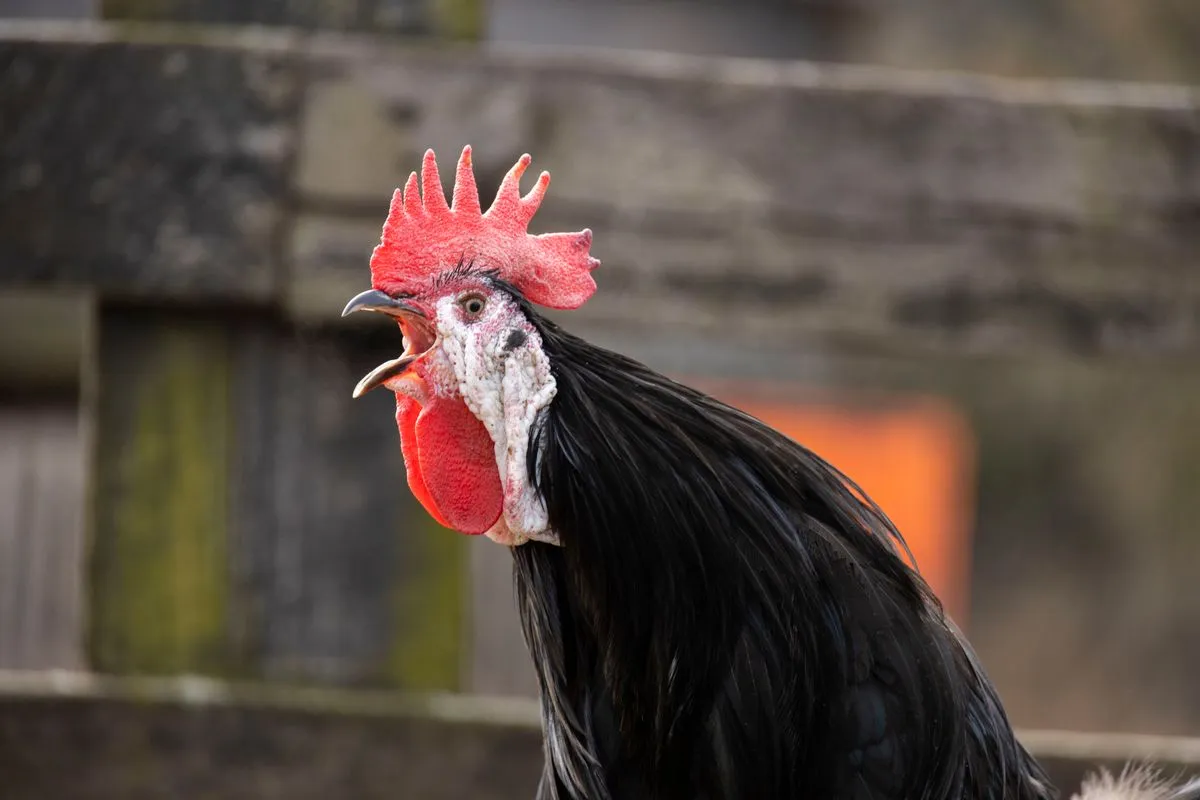
Assume nothing carries over from the hen rule. Cities that welcome backyard hens ban roosters constantly, and the ban is written separately.
Where a code says nothing about roosters, you are in the silence case above — and crowing is the single most complained-about thing a backyard flock does, so a noise clause is a realistic route to being told to remove him. We publish what each city's code says, and where it says nothing, we say that rather than guessing: see the rooster rules by city.
The setback usually binds before the number does

People fixate on the bird limit. In practice the distance rule is what stops them.
Akron does not ban chickens. It says poultry may not be kept in any dwelling or within one hundred feet thereof — and "any dwelling" includes your own house, not just a neighbour's. There is no bird limit at all, no permit, and no variance route. On a large parcel it is entirely legal. On a standard city lot there is nowhere to put the coop, because you cannot get a hundred feet from your own back door.
So read the distances carefully, and note what each one is measured from: a property line, a dwelling, a neighbour's dwelling, or a water body. Those are four different rules and they produce wildly different answers on the same lot.
Check what one code cannot tell you
Even a perfectly-read ordinance is not the whole picture:
- Zoning. The animal chapter and the zoning code are different documents and both apply. Coops are usually accessory structures, with their own height, size and setback rules.
- Permits. Some cities require one, some charge a fee, some require neighbour consent.
- HOA covenants and deed restrictions. These bind you regardless of what any government permits, and they are frequently stricter. If you are in an HOA, read the CC&Rs before you read the ordinance — they can settle it on their own.
- Rental agreements, if you do not own.
If the answer is no
You have more options than the internet suggests, and one thing you must not do.
Do not release the birds. A domestic chicken does not survive it, and in most places abandonment is separately illegal.
If you already know you cannot keep him: post him on the bulletin or check the rooster rules for your city first — a city ban often does not reach an address just outside the line.
If it is a rooster specifically, and the ban is a city ban, check whether you are actually inside the city first — that alone resolves it for some people. Otherwise the realistic paths are rehoming him to a keeper with hens and no cockerel, a farm sanctuary or poultry rescue, or asking the hatchery or feed store you bought from whether they take returns. Some of the rescues and sanctuaries on our map take birds in — filter to Rescue / Sanctuary and each pin lists the species it accepts. Roosters take longer to place than hens; what works is reach rather than luck. Posting him where nearby keepers are looking is free, and there is no sign-up form — you confirm the post by email, and that link sets up a free account so you can edit or remove it later.
What we are doing about this
We are reading city codes one at a time, in full, against the city's own published text, and publishing what they say with the source link and the date we last checked it. It is slow on purpose. Aggregated chicken-law tables are fast to build and wrong often enough to be dangerous, and correcting one requires reading the primary source anyway.
Check the cities we have done so far — and if yours is not there, tell us which one you need and it goes near the front of the queue.
Whatever we publish, confirm it with your municipality before you buy birds. Codes change, and the only answer that protects you is the one you got from the government that would enforce it.